
Francophone Hip-Hop · September 21, 2026
A Guide to Francophone Hip-Hop in Canada in 2026
Francophone rap in Canada isn't one sound, one city or one kind of French. These five artists are a strong place to start if you want to hear where the scene is right now.
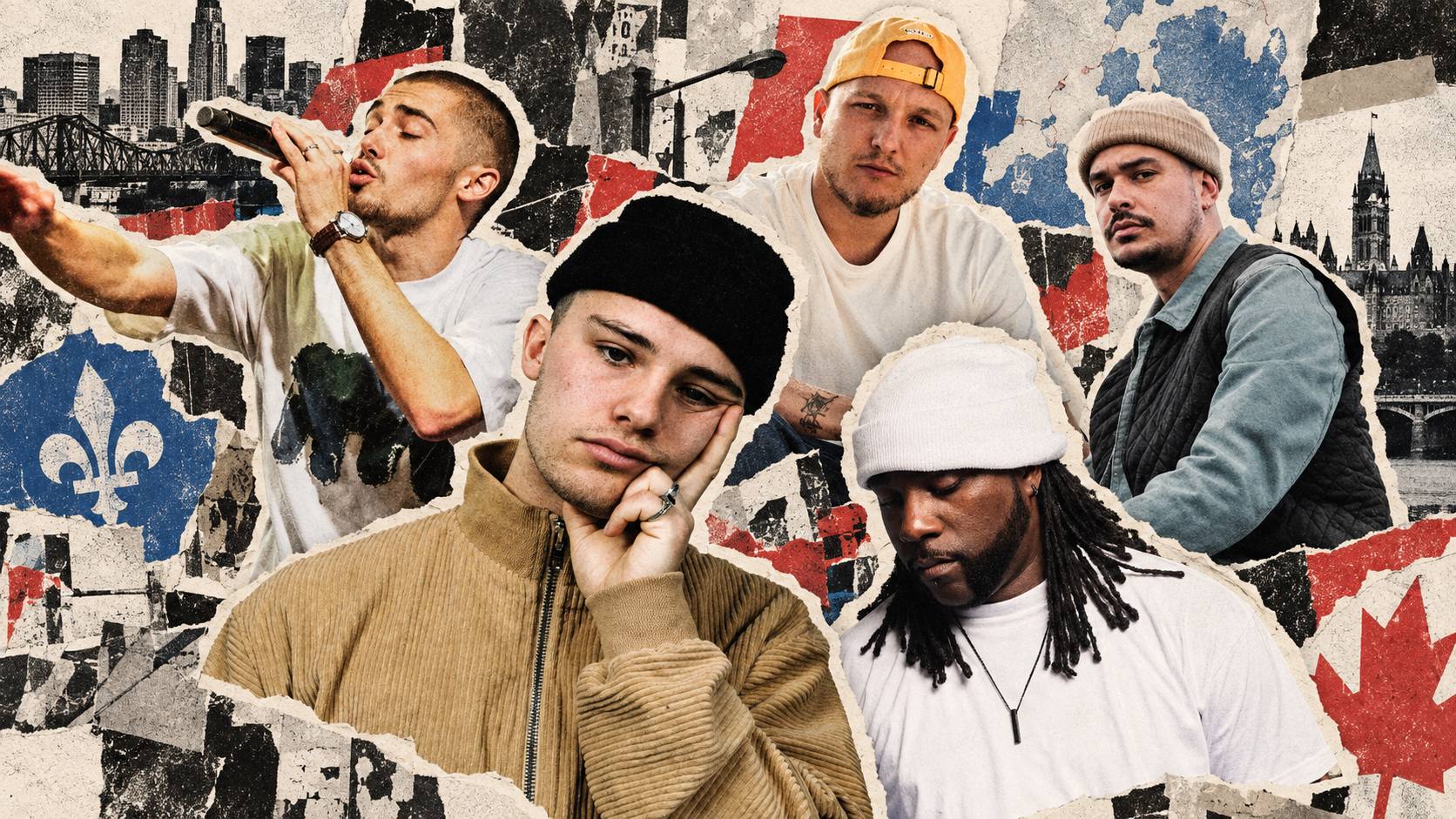
Northern Dial artwork
Calling all of this "French rap" is convenient, but it flattens what makes the Canadian scene interesting.
Quebec has its own rap language, slang, accents and history, while Ottawa-Gatineau adds another Franco-Canadian lane with different cultural reference points. Artists move easily between French and English, hip-hop and pop, trap and folk, Afrobeat and electronic music. The useful question isn't whether all of it fits one definition. It's what the scene sounds like when you stop expecting it to.
This isn't a history lesson or a definitive canon. It's a listener's guide to five artists who make a good starting point in 2026.
Aswell: Melodic Rap With The Edges Left On
Aswell is one of the easiest entry points into the newer wave of Quebec rap because his records don't ask you to choose between rap and melody. He moves through emo rap, pop and bits of Quebec folk instinct without sanding away the tension in his writing. The hooks arrive quickly, but the songs still sound like somebody working through ambition, relationships and uncertainty in real time.
That balance has carried him from the 2021 Solo EP through Banlieue and into his 2026 BERGER era. His current rollout has included “Monnaie,” “Right Now,” “Zendaya,” “Pour Up” and “Mon baby,” while his Quebec tour put him on stages including MTELUS in Montreal and Imperial Bell in Quebec City.
Start with “Right Now.” The franglais comes naturally rather than feeling like a gimmick, and the song shows how Aswell can make something immediately accessible without sounding anonymous.
Aswell, official video.
Jamaz: Darker, Stranger And More Patient
Jamaz works from a moodier corner of Montreal rap. A member of LaF and the Les Fourmis collective, he tends to let atmosphere do more of the work. The beats are often dark and melodic, the writing circles doubt and desire, and the songs don't rush toward a clean resolution.
His 2026 album NOUS LE MONDE, made with astro_psykeman, pushes that sound into a compact 10-track project. “EL DORADO” is a useful doorway because it turns a familiar idea, chasing something better, into something anxious and unstable. Jamaz sounds less interested in arriving than in what the chase does to you.
Jamaz, official video.
Koriass: A Veteran Still Writing In The Present Tense
Koriass is the veteran in this group, but putting him here isn't a nostalgia move. His 2026 album SEPT ANS DE MALHEUR (titre temporaire) arrived in May with collaborations spanning Daniel Bélanger, FouKi, Loud, Souldia, Calamine and others. It feels connected to the current scene because he keeps treating younger artists as peers rather than scenery.
That matters in Quebec rap, where longevity can easily turn into institution status. Koriass still sounds restless. He can write with the density and punch people expect from him, then open the frame enough for a songwriter like Bélanger to change the emotional temperature of a track completely.
The title track with Daniel Bélanger is a good example. It doesn't sound like an elder-statesman exercise. It sounds like two writers finding common ground around regret, time and the mess people carry forward.
Koriass with Daniel Bélanger, official visualizer.
FouKi: Still Zay, Still Moving
FouKi remains one of the scene's easiest personalities to recognize. The looseness is part of the appeal. His records can be funny, melodic, reflective or built around pure momentum, but they rarely sound like he's forcing himself into somebody else's idea of what Quebec rap should be.
Still Kankan arrived in 2025, but the record is very much part of FouKi's 2026 story. He's touring it through the fall, and this summer he shared the Plains of Abraham stage with Koriass at Festival d'été de Québec. The pairing made sense: Koriass brings tension and precision, while FouKi's lighter, elastic delivery can make a huge stage feel casual.
The title track captures that balance. It's relaxed without being passive, and the production gives him enough room to bend phrases and melody around the beat instead of simply attacking it.
FouKi, official video.
LeFLOFRANCO: Francophone Rap Beyond Quebec
LeFLOFRANCO is the reminder that francophone hip-hop in Canada doesn't stop at the Quebec border. Raised in Ottawa and shaped by Haitian roots, he describes his sound as “pop urbaine multicolore,” which is a pretty accurate shorthand for music that pulls hip-hop toward pop, EDM, Afrobeat and Caribbean rhythms without dropping the rap foundation.
His 2026 release Plus forts ensemble keeps that wider palette intact. The appeal is less about purity than movement. LeFLOFRANCO is interested in what happens when Franco-Canadian rap is allowed to share space with dance music, big hooks and diasporic sounds, and that makes him a useful counterpoint to a guide that could otherwise become too Montreal-heavy.
“#LevelUp” predates the current project, but it's still one of the clearest introductions to his approach: accessible, rhythmic and built around a message without turning into a lecture.
LeFLOFRANCO, official video.
Five artists can't explain an entire scene, but they can break the bad habit of treating francophone Canadian rap as one block. Start here, then follow the collaborators, labels, festival bills and regional scenes outward. That's where the map gets interesting.