
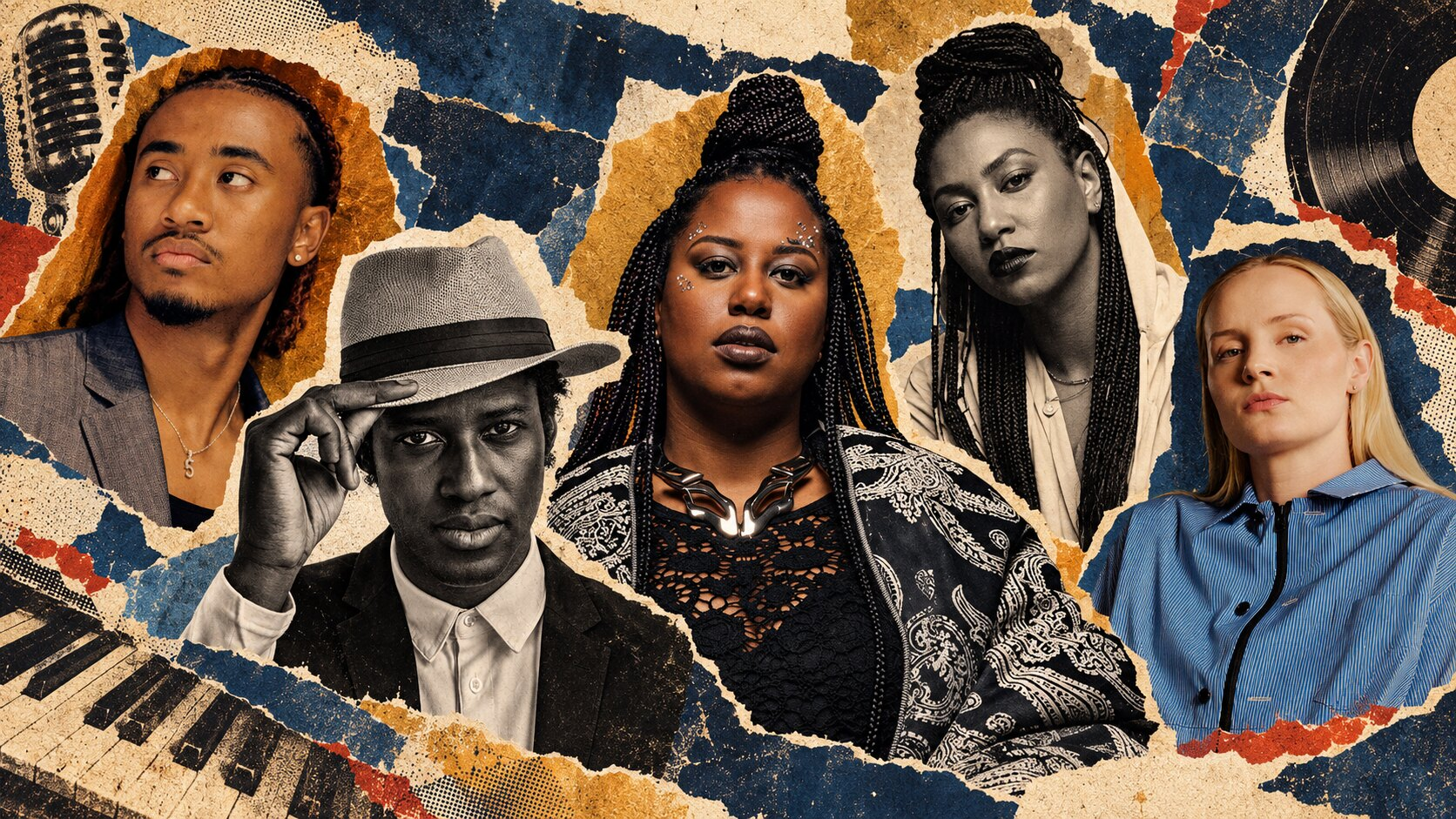
There are two ways into Canadian soul. One is discovering the older tradition, a Stax Museum visit that sends you searching. The other is growing up inside gospel and the R&B that followed it. Clerel and Dylan Sinclair each took one of those routes; Charlotte Day Wilson, Witch Prophet and Dominique Fils-Aimé add production, family history and vocal arrangement to the picture.
The neo-soul label hovers over all of this: the 1990s sound of D’Angelo, Erykah Badu and Maxwell, with earlier work by Tony! Toni! Toné! and Meshell Ndegeocello setting the terms before the Soulquarians’ collaborations. Okayplayer’s history of neo-soul follows those connections. That history explains some of what you’ll hear. It doesn’t make every contemporary soul singer a neo-soul act, and Canada’s own soul history, from Jackie Shane’s 1960s Toronto R&B stardom with “Any Other Way,” predates the category entirely. Historica Canada’s account places the Nashville-born singer within the development of the Toronto Sound.
Dylan Sinclair: Gospel Training, New Experiences
Sinclair joined a church choir at four and named Brandy, D’Angelo, Musiq Soulchild and Lauryn Hill among his influences, alongside contemporaries like Daniel Caesar. In his 2020 interview with Met Radio, he’s precise about the split: gospel informed the sound, growing up in Thornhill informed the writing. By the 2022 EP No Longer in the Suburbs, he’d moved into Toronto and away from his parents, writing with live performance in mind. In a Sidedoor interview, he explained that he wanted audiences singing “Open” back to him. Listen to “Open” with that imagined audience in the room, then try “Suppress,” the song where he pushed himself into new flows and cadences.
Clerel: From Douala to Memphis to Montreal
Born in Douala, Cameroon and raised on church songs, nursery rhymes and French pop, Clerel was studying chemistry in Ohio when a college trip to Memphis changed his relationship with music. At the Stax Museum, Otis Redding’s handwritten lyrics sent him searching through soul’s history; Marvin Gaye’s What’s Going On helped him imagine himself as a singer. In his Wavelength interview, he talks about drawing on every culture he’s lived in, and credits soul with teaching him to trust a song’s feeling instead of freezing over its wording. “Lemon Water,” featuring Zach Zoya, leads into 2024’s Kaleidoscope, where his biography names Makossa and Stax as twin influences. Heard beside Sinclair, the two bring different generations of soul and R&B into the same sequence without treating those histories as interchangeable.
Charlotte Day Wilson: Giving the Performance More Room
Wilson sings, produces and plays most things herself, but making Cyan Blue meant changing the process. In a Happy interview, she describes stepping away from hands-on computer work and letting collaborator Jack Rochon handle production and playing; his speed helped her catch lyrics and feelings before perfectionism set in. Love and grief run through the album, romantic, familial and platonic. On “I Don’t Love You” she wanted the production to feel like memories flashing past, an idea that came from a drive to the studio. Start with “Walk With Me,” the closing track, then return to the beginning with her question in mind: how does a producer leave space for a spontaneous performance?
Witch Prophet: Family History Shapes the Songs
On DNA Activation, Witch Prophet combines Ethio-jazz, R&B and hip-hop across English, Amharic and Tigrinya, co-producing with SUN SUN around songs named for family members. In her Cups N Cakes interview, she explains how their meanings suggested biblical stories and myths, which she wove together with her experiences of the relatives themselves. “Makda” is the entrance; follow it with “Etmet,” featuring Karen Ng on saxophone and Brandon Valdivia on flute. The family references, languages and instrumental contributions explain this record’s particular combination of traditions more precisely than any genre tag.
Dominique Fils-Aimé: The Voice as an Arrangement
Nameless (2018) opens with “Strange Fruit” and closes with “Feeling Good.” Between those interpretations, Fils-Aimé’s originals develop a striking approach: layered singing doing the work of instruments. The title track’s release notes describe an opening vocal phrase repeating beneath other harmonies like a bassline or rhythm-guitar part, with other instruments entering selectively. The framing is historical too: her account connects the album to African American music and the social realities behind the blues, with “Strange Fruit” establishing that context before the originals unfold. Then try “Etmet” beside “Nameless”: one brings saxophone and flute into a family-centred project, the other makes a repeated vocal phrase into an instrumental foundation. Same broader tradition, two completely different sets of choices.