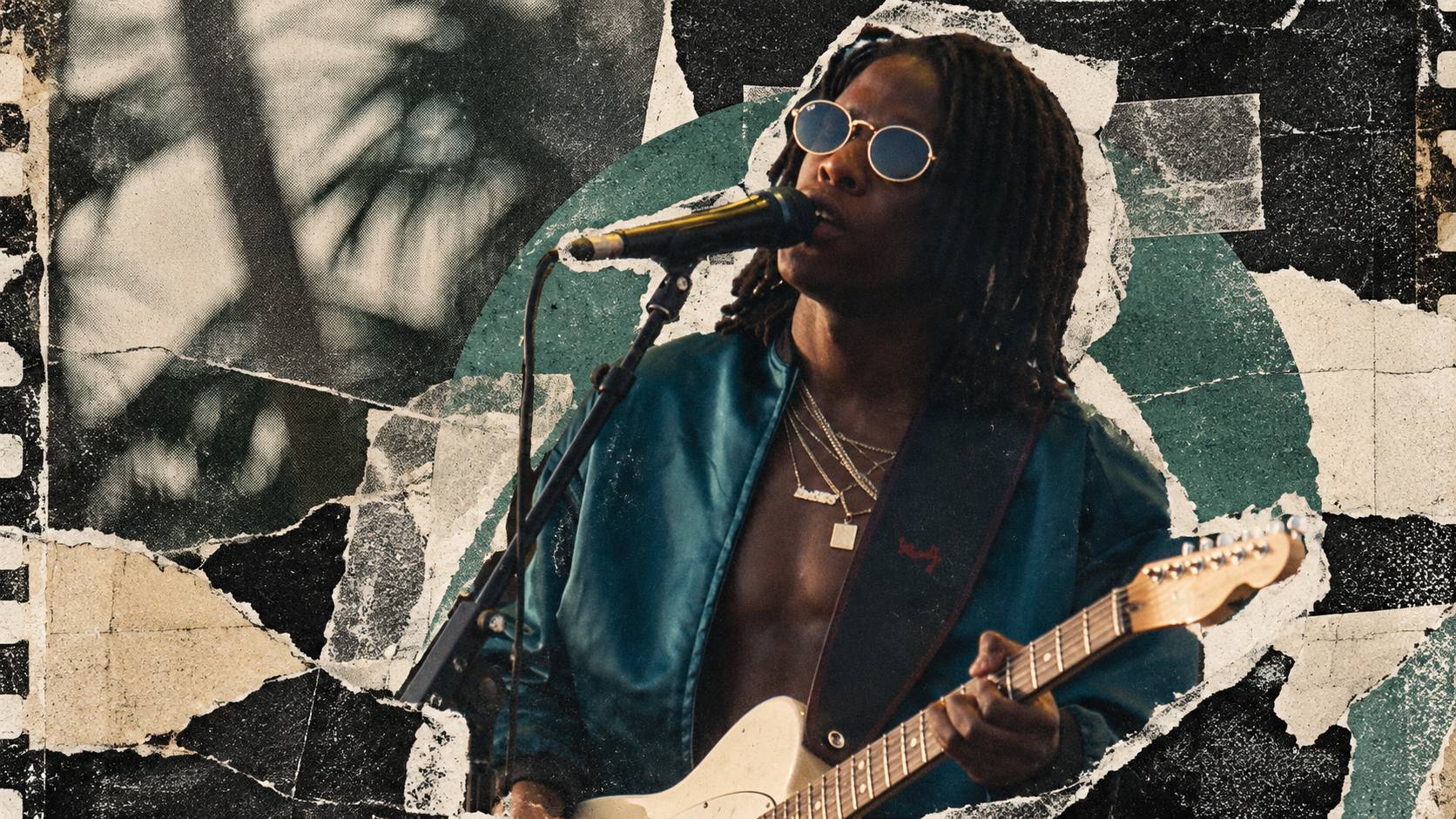
Daniel Caesar’s music has never fit neatly inside one version of R&B. Gospel harmonies sit beside indie guitars, psychedelic soul, jazz and stripped-back songwriting, usually with enough space left around his voice for every bit of doubt, desire and regret to land.
That combination has roots in his upbringing. Caesar spent years singing in church, and the gospel phrasing that shaped his voice remained central even as his music moved into secular R&B, soul and pop, a tension he has spoken about directly.
Freudian made that tension especially clear, pairing church-derived harmonies with songs about love, sex, faith and uncertainty. It also arrived from a particularly interconnected period in Toronto music.
Charlotte Day Wilson, River Tiber, BADBADNOTGOOD, Mustafa and other artists repeatedly moved through the same rooms, records and collaborations, creating something less like a defined “Toronto sound” than a loose creative ecosystem. So if you like Daniel Caesar, looking for six Canadian singers who simply sound like him would be missing the point.
These artists connect to different pieces of what makes his music work. Think of them as six different doors out of the same room.
Charlotte Day Wilson
If the part of Daniel Caesar you love most is the restraint, start with Charlotte Day Wilson. The connection is literal as well as musical.
Wilson appears on Caesar’s Freudian track “Transform,” while Caesar has contributed to her work, and both emerged from the same collaborative Toronto circle alongside artists including River Tiber and BADBADNOTGOOD. But Wilson is hardly a Daniel Caesar substitute.
Her voice sits lower, her production often feels even more patient and her songs can make silence feel almost as important as whatever instrument happens to be playing. “Work” is still one of the clearest introductions, built from a few carefully chosen pieces rather than a wall of production.
If Caesar’s quieter performances are the ones that stay with you, that economy should feel familiar. Wilson leaves enough room for her voice to carry most of the emotional weight.
Dylan Sinclair
Dylan Sinclair is probably the most direct recommendation on this list. The Toronto singer began developing his voice in church as a child before releasing music as a teenager.
Producer Jordon Manswell, whose credits include Daniel Caesar, became an important early collaborator, while Sinclair has spoken openly about taking inspiration from the artists who came before him without wanting to simply imitate them. That lineage is especially easy to hear on “If You Feel Like Leaving Me.”
The song sits inside the kind of intimate, conflicted relationship writing Caesar has repeatedly explored, with a vocal performance that moves between vulnerability and control rather than trying to overpower the production. There is an actual connection behind it too.
Caesar, under his real name Ashton Simmonds, is credited as a co-writer and co-producer on the song. Sinclair represents what happened after Caesar and his contemporaries proved that this kind of Canadian R&B could travel far beyond Toronto.
River Tiber
River Tiber connects most directly to the stranger edges of Daniel Caesar’s music. Toronto multi-instrumentalist and producer Tommy Paxton-Beesley has spent years combining R&B with psychedelic production, electronics, guitar and strings.
He was part of the same collaborative network that included Caesar, Charlotte Day Wilson, BADBADNOTGOOD and producer Frank Dukes. The easiest entry point is almost suspiciously convenient: “West,” River Tiber’s 2016 collaboration with Daniel Caesar.
The song layers their voices over a hazy Frank Dukes production that sits somewhere between psychedelic music and gospel. But don’t stop with the Daniel feature.
River Tiber’s Indigo pushes further into the atmospheric side of that sound, using cello, guitar, manipulated vocals and downtempo production to make music that feels intimate without necessarily being minimal. If the moments when Caesar wanders away from conventional R&B are your favourite moments, River Tiber is probably where you should go next.
Emanuel
Emanuel takes the church-to-R&B connection in another direction. Born in London, Ontario and later based in Toronto, the singer grew up around church music before building ALT THERAPY around ideas of healing, vulnerability and self-examination.
His debut album moves between piano ballads, orchestral arrangements, neo-soul and darker atmospheric production without losing his voice as the centre of the record. That makes “Need You” a natural entry point for a Daniel Caesar listener.
Emanuel’s vocal is expressive without being overcrowded, while the piano-led arrangement leaves plenty of room for longing to do the heavy lifting. “Thought It’d Be Easy” pushes the connection further, drawing openly from church music while using those spiritual undertones to frame romantic uncertainty rather than worship.
The similarity is less about their voices than their instincts. Both understand how effective R&B can become when the arrangement gets out of the singer’s way.
Mustafa
Mustafa is the recommendation for people who care less about whether something technically counts as R&B than whether it hurts properly. The Toronto songwriter and poet came out of Regent Park and the Halal Gang orbit before gradually moving toward stark folk-inflected songwriting.
His work carries grief, faith, friendship and violence with an intimacy that often makes the songs feel closer to private conversations than performances. Caesar and Mustafa have crossed into each other’s work repeatedly.
Mustafa appears on Caesar’s “Toronto 2014,” while Caesar later joined Mustafa on “Leaving Toronto” from Dunya. Those collaborations make sense because the connection between them is emotional more than stylistic.
Both writers are comfortable putting spirituality, memory, love and personal contradictions beside each other without resolving everything into a neat conclusion. If what you really want from Daniel Caesar is the feeling of somebody quietly saying something they probably should not be saying out loud, Mustafa is essential.
Jonah Yano
Jonah Yano is where this list drifts furthest toward jazz. Born in Hiroshima, raised in Vancouver and later immersed in Toronto’s music community, Yano has developed a sound that pulls from soul, indie songwriting, jazz and hip-hop without sitting comfortably inside any one of them.
His relationship with BADBADNOTGOOD has been especially important, with the Toronto group appearing throughout his work and helping shape the jazz-heavy Portrait of a Dog. There is less obvious polish here than in some of Caesar’s biggest records.
Yano often leaves rough edges intact, letting arrangements stretch, drift or feel almost unfinished when that better serves the song. That is exactly why he belongs on this list.
Daniel Caesar listeners who gravitate toward live instrumentation, fragile vocals and the places where soul starts bleeding into indie and jazz may find a lot to love. Yano’s music rewards sitting with it instead of waiting for the chorus to announce itself.
Where Should Daniel Caesar Fans Start?
For the closest transition, go directly from Daniel Caesar to Charlotte Day Wilson or Dylan Sinclair. Both preserve the intimacy and emotional clarity of his music while taking it somewhere slightly different.
River Tiber is the move if you want more psychedelia and production, while Emanuel pushes deeper into soulful vocal performance. Mustafa strips things down toward folk and poetry, and Jonah Yano takes the route toward jazzier, looser songwriting.
That range is really the point. Daniel Caesar did not emerge from a Canadian R&B scene where everybody sounded alike, and the artists around and after him are considerably more interesting when you follow the differences instead of looking for replicas.
Put one of these records on, and the connection starts making more sense. Then keep moving outward from there.
Keep Digging
Try another Northern Dial discovery guide or browse the artist archive for more routes through Canadian music.
If You Like KaytranadaBrowse Artists