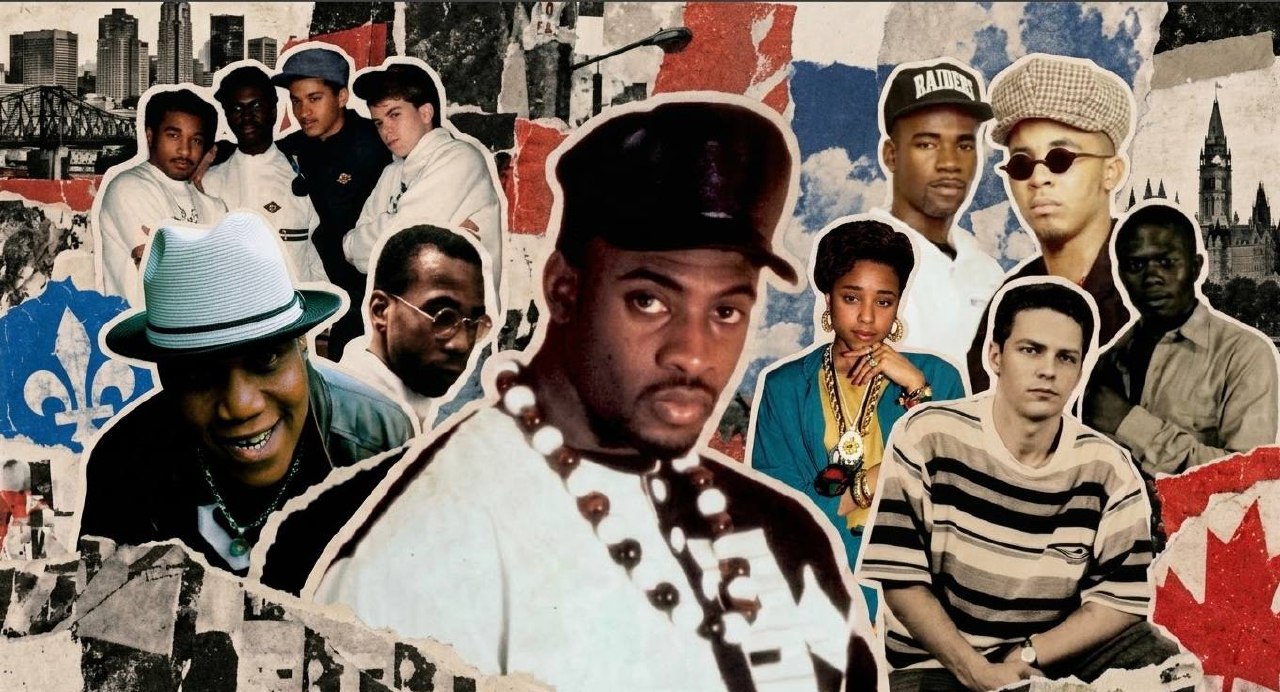
Before Canadian hip-hop had platinum records, JUNO categories or a dedicated show on MuchMusic, it had a radio signal. In the early 1980s, there was already a generation of young DJs, MCs, dancers and promoters in Toronto who had absorbed a culture developing just across the border.
What they did not have was much of an industry willing to recognize them. There were few labels looking for Canadian rappers, almost no commercial radio support and no obvious career path for someone trying to make hip-hop here.
So the scene began building the things it needed for itself. That story starts on campus radio.
Before the Records, There Was Fantastic Voyage
Ron Nelson arrived at CKLN, the campus station at what was then Ryerson, at the beginning of the 1980s. In 1983, his Fantastic Voyage became what Toronto Metropolitan University describes as Canada’s first hip-hop radio show.
The importance of that show is hard to understand if you imagine Canadian hip-hop beginning with records. At the time, Nelson remembers there being no meaningful infrastructure around the music: no established hip-hop promoters, labels, television programs or other dedicated radio shows.
Fantastic Voyage became somewhere people could actually meet. Young artists came to CKLN to perform live, hang around and hear music that commercial radio largely ignored.
Maestro Fresh Wes and Michie Mee were among the early listeners and performers who passed through the show, while Nelson increasingly used his position to bring major American rap acts into Toronto for concerts. The radio show and the parties around it created something Canadian rap desperately needed before it needed a hit: a community that knew it existed.
Hip-hop in Toronto was no longer simply something happening in New York that people in Canada consumed from a distance. There were MCs here, DJs here and crowds willing to come see them.
The First Records Had to Build Their Own Infrastructure
By the middle of the decade, some of those artists were starting to turn a scene into records. The 1987 Break’n Out compilation captured an early cross-section of Toronto rap, including Michie Mee and L.A. Luv alongside Rumble & Strong.
Production connections to KRS-One and the late Scott La Rock of Boogie Down Productions also showed how porous the Toronto-New York relationship could be during the period. Canadian hip-hop was local, but it was never developing in isolation.
Rumble & Strong were themselves among the earliest Canadian hip-hop acts to secure a label deal, signing with Gee Street Records in 1987 before releasing the Crazy Jam EP in 1989. DJ Jam on Strong also became the first Canadian winner of the DMC Canadian championship in 1989, representing Canada at the world competition.
Get Loose Crew were taking another route. Formed in Toronto in 1986, the group created its own East Park Productions label and independently financed a self-titled hip-hop record.
Released in March 1988, the project secured distribution outside Canada, an unusually ambitious move at a time when a domestic rap industry barely existed. Long before Canadian rappers talked about bypassing labels and building their own audience, artists here were doing exactly that because there often was no other option.
Michie Mee Crosses the Border
Michie Mee was doing something different again. Born in Jamaica and raised in Toronto, she developed a style that did not treat her Caribbean background and hip-hop identity as separate things.
Her early work with L.A. Luv brought Jamaican vocal influence directly into Toronto rap at a point when Canadian hip-hop was still deciding what it could sound like. By 1988, Michie Mee had signed with First Priority Music, whose roster included MC Lyte and Audio Two, with distribution through Atlantic.
That made her the first Canadian rapper to sign to a major American label. The breakthrough mattered for more than symbolism.
Canadian hip-hop was developing in constant conversation with New York, but Michie Mee showed that an artist from Toronto did not have to erase the things that made Toronto culturally different in order to participate. Her 1991 debut, Jamaican Funk—Canadian Style, made the point explicit in the title.
Hip-hop, reggae and dancehall could coexist because, in the Toronto where Michie Mee had grown up, they already did. That mixture would eventually become one of the most recognizable features of the city’s music.
Maestro Fresh Wes Makes Canadian Rap Impossible to Ignore
If the first half of the decade proved there was a scene, Maestro Fresh Wes proved Canadian rap could become a Canadian hit. Wesley Williams had already appeared on Fantastic Voyage as the teenage Melody MC before taking on the Maestro Fresh Wes name.
By the late 1980s, he was recording independent demos and pushing the music further than Toronto’s existing infrastructure seemed ready to support. Then came “Let Your Backbone Slide.”
Released in 1989, the single reached No. 10 on the RPM Canadian singles chart and became the first Canadian hip-hop record to reach the national Top 40. Its parent album, Symphony in Effect, became the first Canadian rap album certified platinum and the first album by a Black Canadian artist to reach that certification level.
That success forced Canadian music institutions to confront a genre they had not built much room for. When “Let Your Backbone Slide” received a JUNO nomination in 1990, it had to compete in the Best Dance Recording category because there still was no dedicated rap award.
By 1991, there was. Maestro became the first winner of the JUNO Award for Best Rap Recording, and the infrastructure was finally starting to react to the culture instead of pretending it was not there.
Canadian Hip-Hop Gets a Screen
Radio was only part of the visibility problem. If Canadian rappers wanted television exposure in the 1980s, there was not yet a national program built specifically for them either.
That changed in 1989 with MuchMusic’s RapCity. Producer Michele Geister had already been incorporating rap into Soul in the City, but the amount of music arriving and the demand for dedicated coverage eventually justified a separate half-hour program.
The significance went beyond getting videos on television. A generation of Canadians could now encounter hip-hop as part of the country’s own music culture instead of only through imported American media.
Canadian artists appeared in the same visual ecosystem as the American records already shaping their tastes. Radio had helped create the community, records gave it something physical to circulate and television made the scene substantially harder to overlook.
Dream Warriors Refuse to Sound Like Anybody Else
Dream Warriors widened the possibilities again. King Lou and Capital Q came out of Toronto with a sound that did not attempt to recreate the harder edges dominating parts of American rap.
Their debut album, And Now the Legacy Begins, leaned into jazz, wordplay, Caribbean sensibilities and an intentionally different musical vocabulary. “My Definition of a Boombastic Jazz Style” became the clearest expression of it.
Built around Quincy Jones’ “Soul Bossa Nova,” the track transformed music familiar to Canadians as the theme from the television game show Definition into an eccentric jazz-rap single. It reached No. 13 in the U.K., went gold in Canada and helped take Canadian hip-hop somewhere it had rarely travelled before: an international audience.
The song won the 1992 JUNO for Rap Recording of the Year, one year after Maestro had taken the inaugural award. More importantly, Dream Warriors demonstrated that breaking internationally did not require pretending Toronto was somewhere else.
There Was Never Just One Canadian Rap Sound
That distinction becomes important once you look beyond the biggest records. Devon came into rap from Toronto’s reggae community and used “Mr. Metro” to address police racism.
The song’s video won at the 1990 MuchMusic Video Awards, while his album Keep It Slammin’ earned him the 1993 JUNO for Best Rap Recording. “Mr. Metro” also remains one of the clearest documents of the political edge running through this first wave. His path into hip-hop was different again from the artists surrounding him.
Kish arrived from another direction entirely. His 1991 single “I Rhyme the World in 80 Days” topped the RPM Cancon chart, showing another route by which rap was beginning to enter the country’s mainstream music system.
Put Michie Mee, Maestro, Dream Warriors, Devon and Kish beside each other and an obvious problem appears with the idea of a single early “Canadian hip-hop sound.” These artists shared geography and obstacles more readily than they shared aesthetics.
Toronto itself was Caribbean, Black Canadian, immigrant, suburban and downtown all at once. The records emerging from it sounded accordingly complicated.
Success Did Not Mean the Industry Was Fixed
By the beginning of the 1990s, Canadian hip-hop had achieved things that would have seemed improbable only a few years earlier. There were platinum records, international deals, JUNO recognition, music videos and a dedicated national television show.
The structural problem had not disappeared. Recognition and infrastructure were not the same thing.
In 1990, the CRTC rejected an application from Milestone Radio for a Toronto FM station focused on urban music. Artists from hip-hop, reggae, R&B and related scenes responded collectively with “Can’t Repress the Cause,” deliberately turning the initials CRTC into the title of a protest record.
The lineup itself reads like a snapshot of the moment. Maestro Fresh Wes, Michie Mee, Dream Warriors, Devon, B-Kool, Lillian Allen, Messenjah and numerous others joined the project.
The song argued for something their individual successes had not yet delivered: meaningful institutional support for Black music in Canada. That contradiction is essential to understanding what happened next.
Canadian rappers had demonstrated that audiences existed. They had demonstrated that records could sell, videos could connect and artists could travel internationally, yet the domestic music business still offered remarkably few reliable paths forward.
By 1993, the Door Was Open. Barely.
The first decade of recorded Canadian hip-hop did not produce a stable industry. What it produced was proof.
Ron Nelson and CKLN proved a community could form without commercial radio, while Get Loose Crew proved artists could manufacture and distribute records themselves. Michie Mee crossed into the American industry without abandoning Toronto’s Caribbean reality, and Maestro demonstrated genuine domestic commercial demand.
Dream Warriors showed that Canadian rap could travel internationally on its own terms. Television eventually noticed, the JUNOs eventually created a rap category and Canadian labels eventually started looking more seriously at the music.
But those changes arrived because the culture had already forced the issue. By 1993, the question was no longer whether hip-hop existed in Canada, but what the next generation would do when it realized that recognition still did not equal infrastructure.
The answer would be to build even more of it themselves. In Part 2, Toronto’s independent scene begins exploding outward, and names like Ghetto Concept, Saukrates, Infinite, Choclair, Kardinal Offishall, Tara Chase and Motion start changing what the T-Dot sounds like.
Keep Digging
This is Part 1 of Northern Dial’s Before Drake listening history. Until Part 2 lands, keep moving through our Canadian hip-hop coverage and artist archive.
Canadian Rap DiscoveryBrowse Artists